
Introduction
Effective literacy development doesn’t only occur during scheduled reading blocks. Teachers can support literacy throughout the day by incorporating reading, writing, listening, and speaking skills into all subject areas. This article explores practical ways to integrate literacy into daily classroom routines and how ABZ Learning games and resources can enrich the process.
1. Morning Meetings and Literacy
Begin each day with a literacy-rich morning meeting that includes vocabulary building, sentence structuring, or read-alouds.
- Use word-of-the-day challenges.
- Model sentence creation with student input.
- Play Phonics Memory Match as a morning brain warm-up.
2. Cross-Curricular Literacy Connections
Integrate literacy into science, social studies, and math by assigning reading passages, reflective journals, or vocabulary notebooks related to the unit. The International Literacy Association notes that teaching reading and writing strategies within content areas supports both subject-matter learning and overall comprehension.
- Encourage students to write scientific observations or historical diary entries.
- Use math word problems to support reading comprehension.
- Incorporate Quote Detective to teach evidence-based responses.
3. Literacy Through Classroom Jobs
Give students jobs that require reading and writing, like “weather reporter” or “lunch announcer,” to promote real-world literacy use.
- Students read from prepared scripts or create their own reports.
- Encourages fluency and public speaking.
4. Interactive Word Walls and Vocabulary Games
Maintain a dynamic word wall and integrate it into daily routines through interactive spelling and vocabulary challenges.
- Let students add new content-related words weekly.
- Use Fill In and Spell Right for spelling reinforcement.
5. Shared Reading and Writing Opportunities
Collaboratively read texts and co-construct written responses with your class to build comprehension and writing skills.
- Use enlarged texts for shared reading.
- Model summarizing and inference-making.
6. Read-Alouds with a Purpose
Choose engaging read-alouds that connect with curriculum themes or social-emotional learning goals.
- Incorporate character analysis or theme discussion.
- Follow up with Wednesday Comprehension to reinforce understanding.
7. Daily Independent Reading and Journaling
Establish a time for students to read self-selected books and write reflections in journals, promoting reading fluency and expression.
- Provide prompts that tie into curriculum.
- Use sentence starters to support reluctant writers.
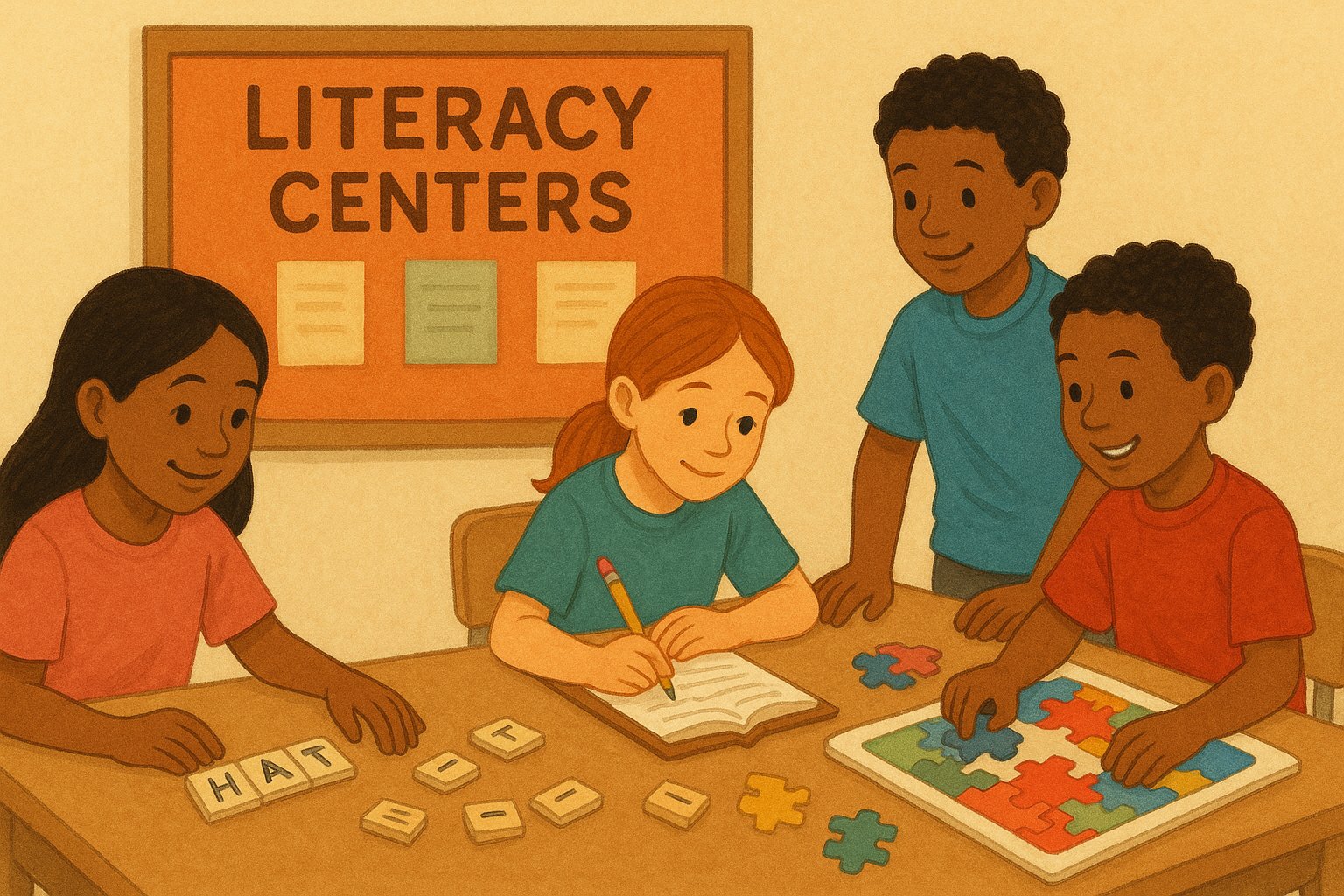
8. Centers and Literacy Rotations
Implement literacy stations that rotate daily or weekly to reinforce skills in a fun, independent way.
- Incorporate ABZ Learning games like Phonics Dance Battle or Reading Fruit Ninja.
- Include listening stations and reader’s theater.
9. Peer Collaboration and Literacy Circles
Encourage students to discuss and interpret texts with peers to develop critical thinking and collaborative communication skills.
- Use structured discussion roles during literacy circles.
- Provide sentence stems and question prompts.
10. Celebrating Literacy Milestones
Make literacy progress visible and motivating by celebrating achievements.
- Track words read or vocabulary mastered.
- Host author celebrations and reading awards.
- Display high scores from ABZ games as reading growth evidence.
Conclusion
Literacy instruction thrives when integrated seamlessly into everyday learning experiences. Whether during math lessons or class jobs, embedding reading and writing helps students see literacy as essential and enjoyable. ABZ Learning’s suite of standards-aligned games and interactive resources is a powerful ally in making this integration both effective and fun. Explore more at ABZ Learning.
FAQs
Q1: Why should literacy be integrated into all subjects?
A1: Integrating literacy enhances comprehension and communication skills across disciplines, making learning more meaningful.
Q2: How can I incorporate literacy into math?
A2: Use math journals, word problems, and vocabulary tasks to build reading and writing in mathematical contexts.
Q3: What ABZ Learning game is good for vocabulary?
A3: Fill In and Spell Right is great for spelling and vocabulary reinforcement.
Q4: Can young students benefit from literacy integration?
A4: Absolutely. Simple activities like morning messages and shared reading help even early learners grow foundational skills.
Q5: What’s a good way to track progress?
A5: Use reading logs, journals, and ABZ Learning’s game-based data to celebrate and analyze student growth.