Introduction
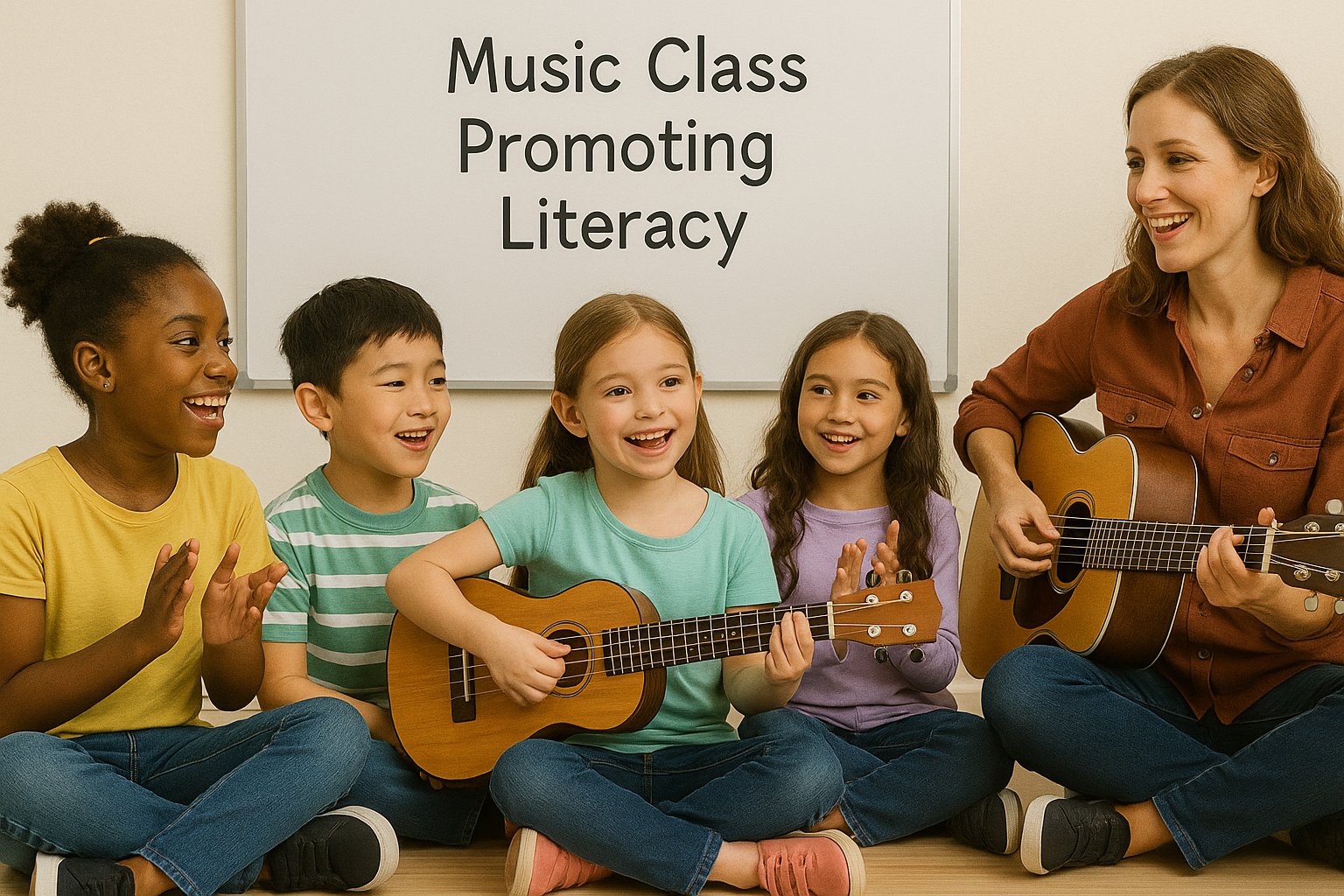
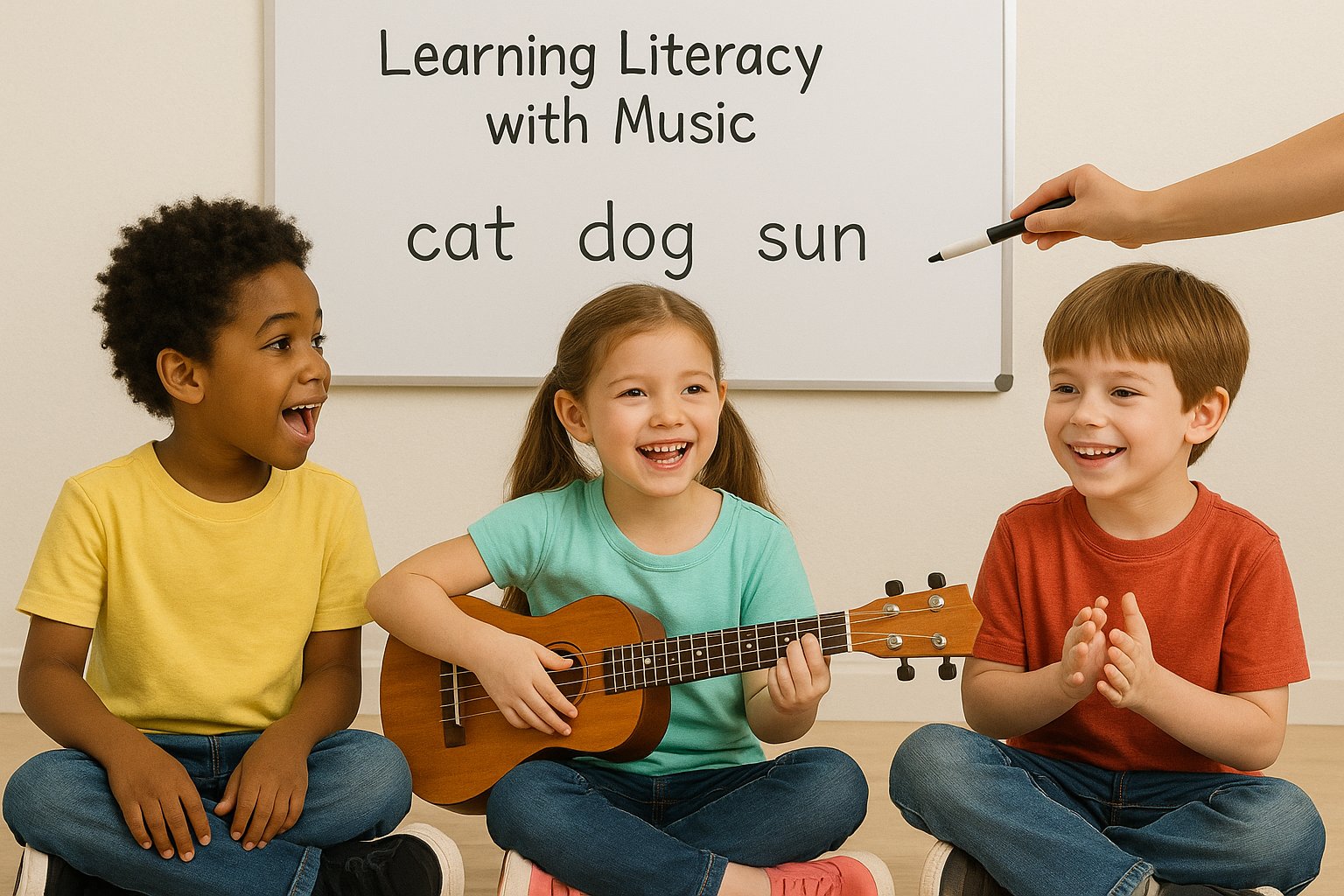
Music is a powerful educational tool that transcends cultures and age groups. For young learners, songs and melodies offer more than entertainment—they provide an engaging pathway to develop essential literacy skills. In this article, we examine the intersection of music and literacy instruction, exploring how rhythm, rhyme, and repetition foster phonemic awareness, vocabulary acquisition, reading fluency, and comprehension. Educators and parents can leverage these techniques to make learning not only effective but joyful.
1. Music and the Brain: Why It Works
Neuroscience has shown that music stimulates multiple areas of the brain simultaneously. When children sing, they activate centers responsible for language, memory, and emotion, creating deeper learning pathways.
- Music enhances auditory discrimination, crucial for phonics.
- Melodic and rhythmic patterns support memory retention.
- Movement with music builds gross motor coordination, supporting kinesthetic learners.
2. Boosting Phonemic Awareness through Songs
Phonemic awareness is the ability to hear and manipulate individual sounds in words. Songs that emphasize rhymes, alliteration, and sound repetition help young learners recognize phonemes more effectively.
Examples of Effective Phonemic Songs:
- "Apples and Bananas" for vowel sounds
- "Willoughby Wallaby Woo" for beginning sounds
- "Down by the Bay" for rhyming structures
Try our curated phonemic awareness song playlists at ABZ Learning.
3. Enhancing Vocabulary and Language Structures
Repetitive lyrics in songs help children retain new words and phrases, supporting receptive and expressive vocabulary development. Music also introduces sentence structure, prepositions, and storytelling through lyrics.
Tips to Boost Vocabulary Through Songs:
- Sing action-based songs (e.g., "Head, Shoulders, Knees, and Toes")
- Use visual aids and gestures for context
- Pause and discuss new words mid-song
4. Building Fluency and Prosody with Music
Fluency is about reading with speed, accuracy, and expression. Singing naturally builds prosody—the rhythmic and intonational aspects of speech. Repeated singing improves pacing and confidence.
5. Songs as Mnemonics for Letter-Sound Correspondence
Alphabet songs and phonics chants help solidify letter-sound associations. Mnemonic tunes aid long-term memory and are especially effective for early or struggling readers.
Explore our phonics-through-song collection at ABZ Learning.
6. Comprehension Through Song Lyrics
Analyzing lyrics helps build reading comprehension skills. Teachers can ask children to predict rhymes, sequence events, or explain meaning. Simple stories in songs promote narrative understanding.
7. Encouraging Writing through Music
Students can rewrite lyrics, fill in missing rhyming words, or compose their own verses. These activities foster phonics, spelling, and creative writing skills.
8. Classroom Activities to Integrate Music into Literacy Instruction
- Morning sing-along for routine building and sight word practice
- Lyric comprehension worksheets
- Musical storytelling and reader's theater
9. Best Practices for Using Songs Effectively
- Choose age-appropriate, repetitive songs
- Incorporate movement and visual supports
- Reinforce concepts before and after singing
10. Popular Music Resources for Literacy Instruction
There are numerous online platforms offering music for literacy, such as:
- ABZ Learning Songs Library
- Sing Up and Songs for Teaching
- Jack Hartmann and Laurie Berkner educational channels
FAQs
Q1: What literacy skills are best supported by music?
A1: Phonemic awareness, vocabulary, fluency, comprehension, and writing all benefit from music-based learning.
Q2: How often should music be used in literacy lessons?
A2: Ideally daily, even for 10–15 minutes. Consistent exposure is key.
Q3: Can songs help children with learning disabilities?
A3: Yes. Music engages multiple senses, supporting diverse learning styles and reducing anxiety.
Q4: What instruments can enhance musical literacy lessons?
A4: Simple instruments like rhythm sticks, drums, or tambourines can add movement and timing awareness.
Q5: How can I create my own literacy songs?
A5: Use common melodies like "Twinkle Twinkle" or "Row Your Boat" and insert your own literacy-focused lyrics.
Conclusion
Music transforms literacy instruction into a memorable, engaging, and effective experience. Whether you're working on phonics, vocabulary, or fluency, integrating songs enhances learning outcomes. As educators and caregivers, tapping into the universal appeal of music can open new doors in every child’s literacy journey. Visit ABZ Learning to access a full library of literacy-building songs and activities that harmonize fun and fundamentals.